

Lawn Care Fertilizer Services in Plano, TX
Get a greener, healthier lawn without trying to figure out the timing, weeds, and treatments yourself.
Serving Plano, Allen, McKinney, Frisco & Nearby Areas in Texas
North Texas Lawns Are Hard to Keep Healthy
A healthy lawn takes more than putting down fertilizer once or spraying weeds when they show up. In North Texas, timing matters. Heat, watering, weeds, insects, and disease can all work against your lawn if the right treatments do not happen at the right time.
How We Help Your Lawn Improve
You should not have to become a lawn care expert just to have a yard you are proud of. We make the process simple, clear, and easier to manage.
Request Your Quote
Tell us where you live and what you need help with so we can get you started.
Choose the Right Package
Pick the level of fertilization, weed control, and lawn protection that fits your goals.
We Treat at the Right Time
Our team handles the scheduled treatments your lawn needs throughout the year.
Our Guarantees
Your lawn care should come with confidence. That’s why every package includes protection between visits and our commitment to make things right.
Weed-Free Guarantee
If weeds pop up between scheduled visits, just let us know. We’ll come back and treat them at no extra charge, so your lawn stays on track between services.
Make It Right Guarantee
Your satisfaction is our promise. If you’re not completely satisfied, we’ll promptly return to make it right. If we can’t, we’ll refund or reduce your bill to whatever you believe is fair — even down to $0.
Choose the Right Lawn Care Plan for Your Yard
Most homeowners want a greener, healthier lawn but don’t know which treatments their yard actually needs — or when those treatments should happen. Choose the package that fits your lawn, and we’ll handle the timing, treatments, and follow-up.
Fertilization & Weed Control
The foundation for a greener, healthier lawn with fewer weeds.
- Fertilization treatments 5x per year
- Post-emergent weed control 8x per year
- Pre-emergent weed control to help prevent future weeds
- Summer insect control for turf-damaging insects
- Free return trips between scheduled visits
- No contracts
Added Protection for North Texas Lawns
Fertilization and weed control plus protection from common lawn problems.
- Everything included in Lawn Health Program
- Year-long fire ant control
- Liquid aeration and dethatch 2x per year
- Grub control 1x per year
- Lawn disease control 2x per year
Lawn, Bed, Shrub & Ornamental Care
The most complete treatment plan for your lawn, flower beds, shrubs, and ornamental trees.
- Everything included in Lawn Health + Protection Program
- Flower bed and shrub treatments
- Shrub and flower bed slow-release fertilizer 3x per year
- Flower bed pre-emergent treatment 3x per year
- Hardscape pre-emergent weed control 3x per year
- Insect and disease control on shrubs and ornamental trees 3x per year
Confused About What Your Lawn Needs?
You don’t have to figure it out alone. Give us a call, tell us what you’re seeing, and we’ll help you understand the next right step.
Talk With Our TeamWant Us to Handle the Whole Yard Too?
A great lawn is easier to maintain when mowing, fertilization, weed control, shrubs, and beds are all working together. If you want one team handling the full property, ask us about our full-service maintenance plans.
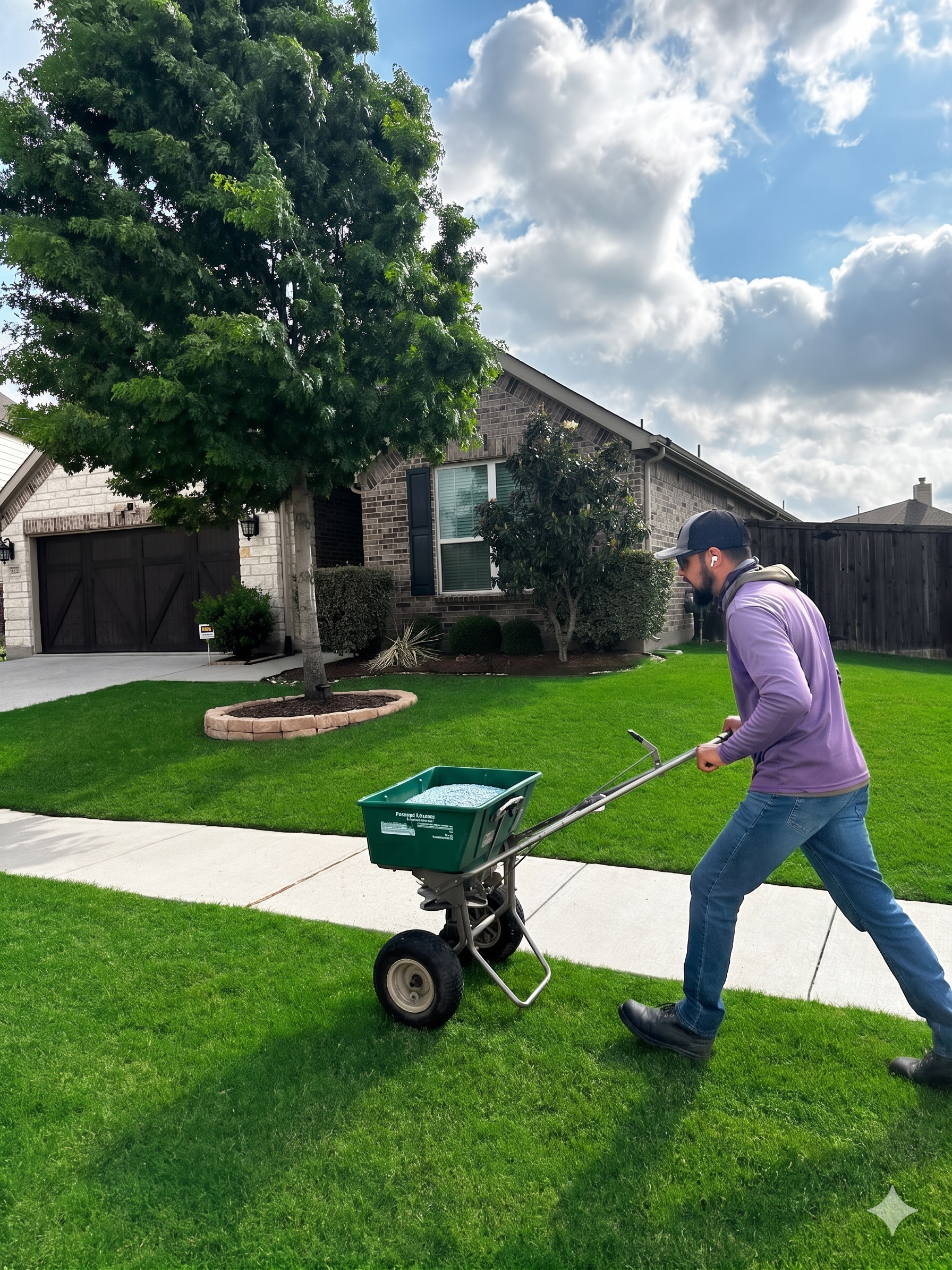
We offer our Lawn Fertilization service in Plano, Allen, McKinney, Frisco, TX, and nearby areas.
Choose between our three comprehensive lawn fertilization packages to suit your turf's needs!
Regular fertilization is crucial to keeping your lawn healthy and strong. Let our professionals at College Fund Landscaping take care of that for you with our lawn fertilization service! We offer a basic lawn fertilization package, which includes eight visits throughout the year to fertilize and apply weed control treatments. You can also opt for our upgraded package, which comes with everything from the basic one, plus grub control, fire ant control, disease prevention, and aeration!

Lawn Fertilization
Our lawn fertilization service is offered to homeowners in and around Plano, Allen, McKinney, and Frisco TX. Call us today at (945) 758-9523 to sign up!
Slow-Release Fertilizer for Shrubs & Flower Beds
Your landscape beds need consistent care just like your lawn, and one of the best ways to support strong, vibrant plants is through slow-release fertilization. This method gives your shrubs and flowers a steady stream of nutrients over time, rather than one big rush that fades fast.
How it works
Slow-release fertilizer uses specially coated granules that break down gradually when exposed to moisture and heat. As they dissolve, they release nutrients little by little, giving your plants what they need to grow fuller, stronger, and healthier without overwhelming the roots or soil.
Why we use it for your beds
Consistent feeding: Your flowers and shrubs stay nourished for weeks at a time.
Healthier roots & blooms: Steady nutrients help plants develop deeper roots, fuller foliage, and longer-lasting blooms.
Less burn risk: Because the fertilizer releases slowly, there’s a much lower chance of burning tender plants or overloading the soil.
Fewer touchpoints: One application lasts much longer, so we’re not disrupting your beds every few weeks.
More eco-friendly: Slow-release formulas reduce runoff and leaching, which is good for your plants and the environment.
Our lawn fertilizer treatments are pet-safe!
Our Associates Degree Lawn Fertilization Program Schedule
If you want a simple lawn care program that will meet your turf's needs, then our associates degree lawn fertilization program is perfect for you. When you sign up for this package, we will visit your property eight times from January to December to administer our lawn fertilizer, pre- and post-emergent weed control, and lawn insect control treatments. Here's the schedule we follow:
January to mid-February: During our first visit, we will apply a granular fertilizer & post-emergent weed control treatment (targeting grassy & broadleaf weeds) with potassium to strengthen the root system and eliminate any existing weeds on your lawn.

Mid-February to March: This application consists of another round of liquid pre & post-emergent weed control targeting crabgrass & broadleaf weeds.
April to mid-May: As your grass starts to actively grow again, we will administer its first dry fertilizer treatment with a slow-release fertilizer that is high in nitrogen. We'll also apply post-emergent weed control to target any weeds that have popped up on your turf.
Mid-May to June: During our next visit, we'll give your grass a nutrient-packed fertilizer treatment (high nitrogen) to help it get stronger for the summer season. Another round of post-emergent weed control will be administered as well to help kick weeds to the curb.
July to mid-August: During our next visit, we'll give your grass a nutrient-packed dry fertilizer treatment to help it stay strong for the late summer season. Another round of post-emergent weed control will be administered as well.
Mid-August to mid-September: This visit includes a liquid lawn insect control treatment for surface and subsurface troublesome insects and another post-emergent weed control application to help keep pests and weeds at bay.
Mid-September to October: This is the most important application of the year, we will apply a liquid pre- and post-emergent weed control treatments to help prevent fall and winter weeds while targeting any that have already surfaced.
November to December: We close off the year with nourishing liquid fertilizer and soil enhancement treatment to strengthen the root system for the winter months. We'll also treat your turf with post-emergent weed control!
FREE return trips for any reason in between visits:

We offer an ADVANCED Bachelors Degree Lawn Fertilization program that includes grub control, aeration, fire ant control & more!
If you’re looking to take your lawn care to the next level, our Bachelors Degree Lawn Fertilization Program is the perfect choice! This advanced package includes everything from our Associates Degree Program, plus grub control, fire ant control, disease prevention, and aeration/dethatching. Here's the schedule we follow to ensure your lawn stays healthy all year long:
January Visit: We start the year with a fire ant control treatment to prevent them from establishing on your lawn.

Spring February to March: Our team will aerate and dethatch your lawn, improving its access to essential nutrients and strengthening its root system.
April to mid-May: We apply a preventative disease control treatment to protect your lawn from fungal issues before they take hold.
Mid-May to June: This visit includes a grub control treatment to prevent grubs from becoming a serious problem for your turf.
Mid June - July: After the initial early summer growth spurt, we aerate and dethatch your lawn again to promote deeper root growth and long-term lawn health.
Mid-September to October: We finish off with a final fungal control treatment to help protect your grass from disease and keep it thriving.
Frequently Asked Questions About Lawn Fertilization
-
You can and a lot of homeowners do! But it’s easy to overdo it or miss the right timing. If you’re
comfortable reading labels, calibrating a spreader, and keeping up with a schedule, DIY can work. If not, hiring a pro takes out the guesswork (and gives better results long-term). -
Yes, they’re generally safe as long as they’re applied correctly and given time to settle. Most treatments need a short period (often 24 hours or after the first watering) before it’s safe to play on the grass. We always recommend waiting until the product has dried or watered in fully.
-
That depends on your lawn’s condition and the product used. You might notice greener grass within a week, but root-level improvements take more time. Think of it like feeding your lawn a balanced diet; steady, healthy growth beats a short sugar rush.
-
It depends on your grass type. In North Texas, most lawns are warm-season (like Bermuda or St. Augustine), so late spring through summer is ideal. A fall application helps strengthen roots before winter and we use root stimulators during the winter season to promote a quick green up come spring time.
-
It’s best to wait a day or two. If you mow right away, you might disrupt how the fertilizer settles into the soil, especially if it’s granular. Let it absorb first, then resume regular mowing.
-
Yes, watering is key. Many fertilizers need to be watered in to activate the nutrients and carry them into the root zone. If there’s no rain in the forecast, give your lawn a good soak after treatment.
-
Yes, it helps in the long run. A thick, healthy lawn crowds out weeds and makes it harder for them to take root. For active weed problems, though, you’ll want a designated weed control treatment alongside fertilization.
-
Too much of a good thing can burn your grass, especially with quick-release formulas. If you DIY, always follow the label and measure carefully. If you think you’ve overdone it, watering heavily can help flush out excess before it damages the turf.
-
That depends on your lawn’s needs. Most Texas lawns do well with 4-6 feedings a year. You’ll want to space them out with the seasons; spring green-up, early summer, mid-summer, and fall are common touchpoints.
-
It depends on how hands-on you want to be. Hiring a pro means your lawn gets the right product at the right time, applied evenly, with expert eyes checking for problems. If you’re short on time or just want it done right, it’s usually worth it.
Masters Degree Lawn Fertilization Program
Our Masters Degree Program is the ultimate lawn care package, offering everything included in the Associates and Bachelors Degree Programs, plus comprehensive flower bed and shrub treatments to keep your entire landscape healthy and thriving.
Pre-Emergent Weed Control (Flower Beds & Hardscape Areas) – 3x Per Year (October - February)
Post-Emergent Weed Control (Flower Beds & Hardscape Areas) – Applied as needed to eliminate existing weeds.
Slow-Release Fertilizer (Flower Beds & Shrubs) – 3x Per Year (February - March, April - May, August - September)
Insect & Disease Control (Shrubs & Ornamental Trees) – 3x Per Year – (April - May, June - July, August - September)

Call us today to sign up for our lawn fertilization service!
Our team at College Fund Landscaping proudly offers our lawn fertilization service to residential properties in Plano, Allen, McKinney, Frisco, TX, and surrounding communities. With our lawn fertilization packages, you can be confident that your grass receives everything it needs to flourish throughout the year. Sign up for our lawn fertilization service today by calling us at (945) 758-9523!